
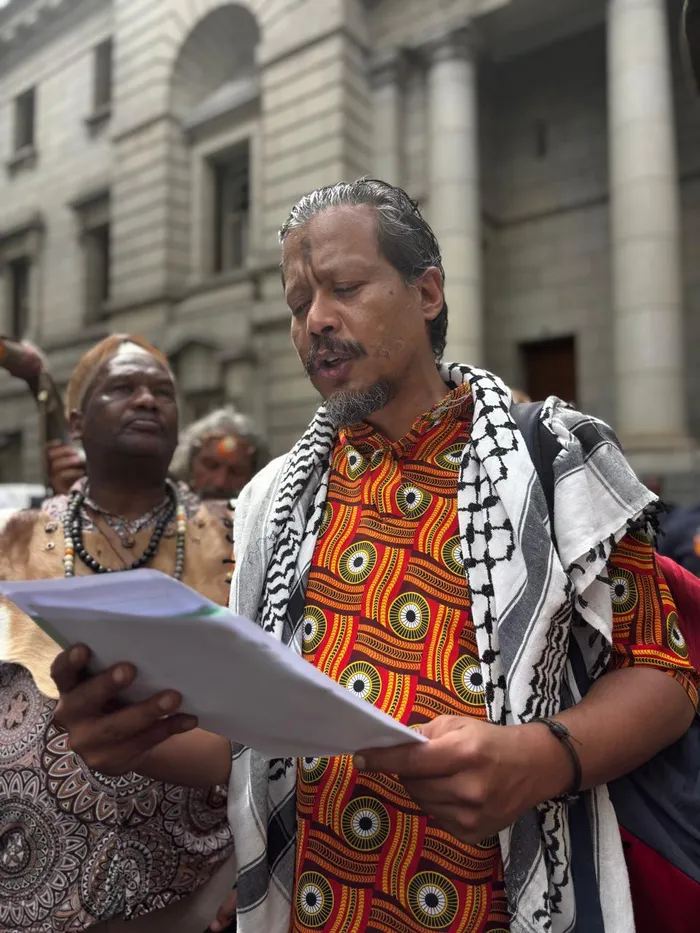
Tauriq Jenkins, convenor for Save Our Sacred Lands addresses the crowd outside Cape Town High Court
Image: TARA ISAACS
Tears flowed as angry demonstrators chanted “Hands off our land” outside the Western Cape High Court today, as a coalition of civil society organisations opposed the City of Cape Town’s planned auction of more than 50 parcels of public land.
The auction was set to take place on Thursday, February 26, with several prominent sites — including the historic Good Hope Centre — due to go under the hammer.
Earlier today, February 24, protesters gathered at the Good Hope Centre itself, one of the primary properties earmarked for sale, expressing upset and concern over what they described as the loss of public assets.
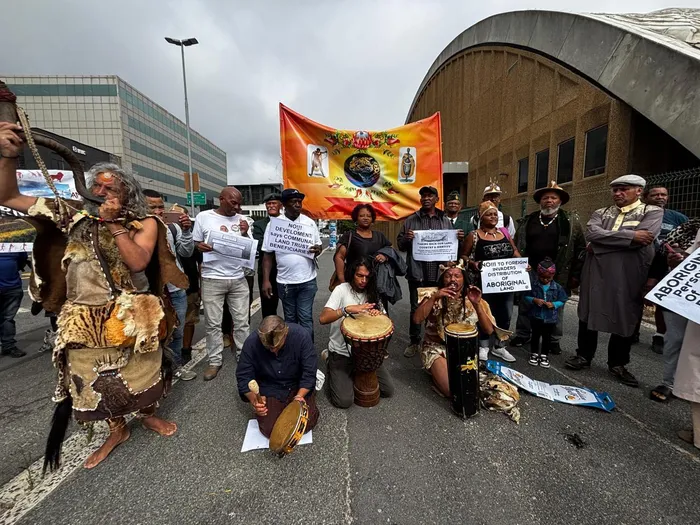
Protesters gathered outside the Good Hope Centre on Tuesday, February 24
Image: TARA ISAACS
Community members said the land should be used to address pressing social needs rather than transferred to private developers.
Protester Velma Scheepers said: “We are the owners of this country, we are the first nation.”
Eloise Rossouw, spokesperson for the Khoi and San community, said she supported the demonstration and was frustrated that the auction had been announced without public participation.
The City has confirmed that the properties are zoned for residential, commercial, industrial, and mixed-use purposes. The list includes the Good Hope Centre precinct, land parcels in Mitchell's Plain, and sites in Atlantis, Parow, and Goodwood.
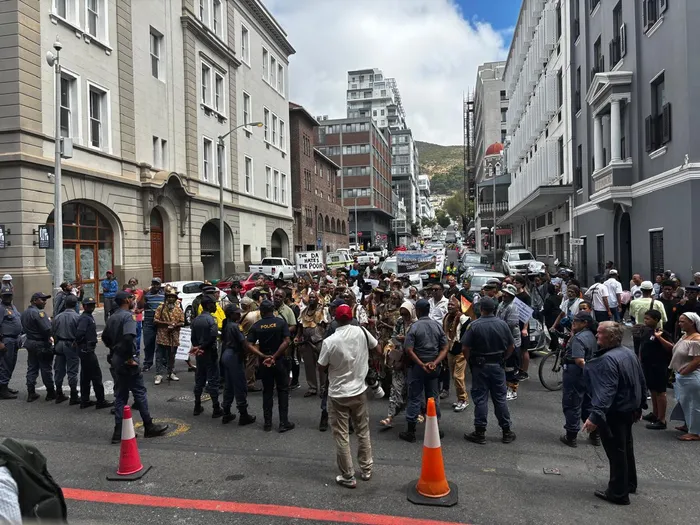
Protesters gathered outside the Cape Town High Court, singing and chanting.
Image: TARA ISAACS
Lawyers representing a collective of land activists have filed an urgent court application in a bid to halt the proceedings and prevent the City from moving forward with the sale.
The City maintains that the auction forms part of a broader economic strategy.
Mayco member for Economic Growth, James Vos, said claims that land was being sold without regard for social return or housing needs were incorrect.
He said the properties had undergone extensive internal processes to determine their highest and best use.
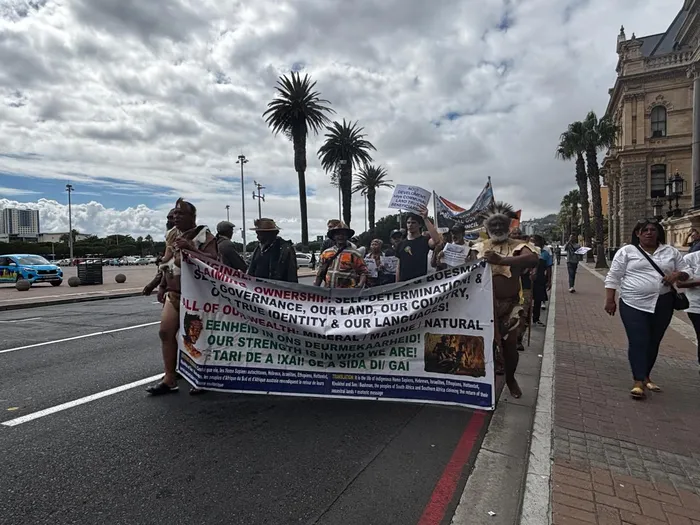
Protesters march down the streets of Cape Town CBD.
Image: TARA ISAACS
According to Mr Vos, many of the sites were not suitable for social housing due to zoning constraints, location, size, bulk limitations or market viability.
Where land was appropriate for human settlements development, it was transferred to the City’s Human Settlements Directorate rather than auctioned.
The broader portfolio includes residential, commercial and industrial sites across the metro, totalling roughly 282,000 square metres.
The auction, managed by Claremart Group, will be conducted both online and in person.
Beyond the current dispute, the Good Hope Centre carries significant architectural and social history.
Last week, Capetowner spoke to Associate Professor Micaela Antonucci, from the University of Bologna, and Professor Gabriele Neri about the venue’s legacy.
The pair are the authors of the book Pier Luigi Nervi in Africa.
According to their research, the Good Hope Centre was designed by renowned Italian engineer and architect Pier Luigi Nervi in collaboration with his son, Antonio, and local architects Colyn & Mering.
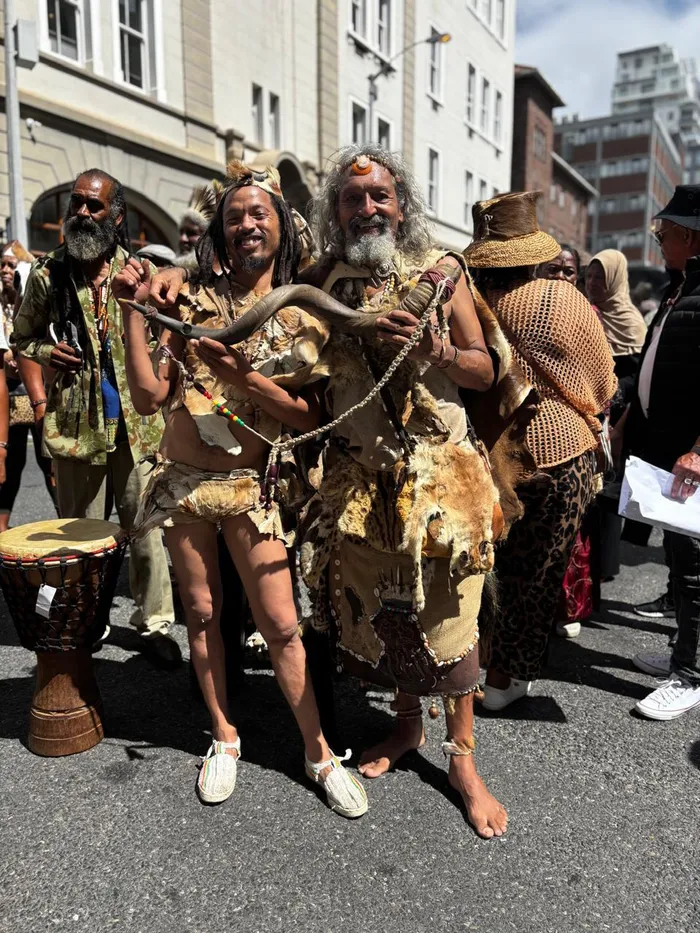
Kirsten Fisher, and identified as called 'Elder Fish"
Image: TARA ISAACS
Completed in the 1970s and inaugurated in 1977, it featured what was then the largest concrete cross vault in the world and remains a landmark of reinforced concrete design.
When the professors visited Cape Town in 2018, they presented their research during a lecture at Zeitz Museum of Contemporary Art Africa (MOCAA) at the Waterfront.
At the time, they described the Good Hope Centre as an “exceptional building” and explained that it represented one of Nervi’s final major works.
They also noted its social importance: when it opened, it was intended to be accessible to all races during apartheid, prompting debate about discrimination in entertainment spaces.
Heritage Western Cape had not responded to emails sent on Tuesday, February 17, and follow-up telephone calls to its offices went unanswered.